

Ms Nina @ Nordic Writes
Hi ! This is Ms Nina @ Nordic Writes.
Today we are going to explore and deepen our understanding on The Magic of Sensory Play ! If you’ve ever watched your child squish playdough, pour water back and forth, or get completely absorbed in sand play, you’ve seen the magic of sensory play in action. It looks small, but trust me ! It is shaping their brain, their confidence, and their future in ways you might not even realize.
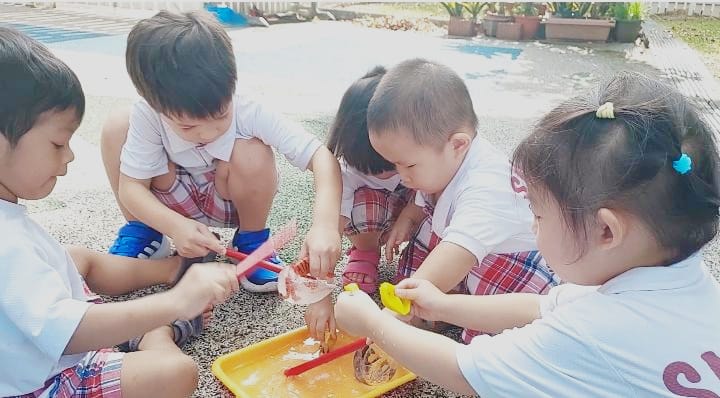
Sensory play is more than just “messy fun”. It is the foundation for how children learn, grow, and understand the world around them. In these precious preschool years, their brains are building critical connections that set the stage for all future learning.
When children squish playdough, pour water from cup to cup, or run their little hands through sand, they aren’t just playing. They’re strengthening their brains, developing skills, and learning how to make sense of everything around them.
As an educator (and a mom), I’ve seen firsthand how powerful these simple activities can be. And the best part? You don’t need fancy equipment or a Pinterest-perfect setup to make it happen.
What’s Happening in the Brain
Each time your child experiments with textures, sounds, and movement, their brain is busy forming and strengthening neural pathways. Think of it as building “superhighways” in their brain. The more they use them, the stronger they get !
And here’s something most people don’t realize: sensory play isn’t just about the five senses (touch, sight, sound, smell, taste). It also develops the “hidden” senses which are their:
Proprioception (knowing where your body is in space), which are built through climbing, pushing, pulling.
Vestibular sense (balance and movement), which are developed through swinging, spinning, rolling.
These are the foundations of coordination, balance, and self-awareness.
Why Sensory Play is So Powerful
Cognitive Growth : Children become little scientists, testing out ideas and making discoveries.
Fine & Gross Motor Skills : Pouring rice, squeezing sponges, jumping in puddles. Each movement builds strength and coordination.
Language Development : Every new texture or sound becomes a new word to describe: “squishy,” “rough,” “smooth.”
Emotional Regulation : Ever noticed how calming it is to squish slime or watch glitter settle in water? The same applies to children. It helps them self-soothe.
Social Skills: When kids share sensory play, they practice turn-taking, problem-solving, and teamwork.
Easy Sensory Play Ideas (That Don’t Break the Bank)
1. Sensory Bins
A plastic tub filled with rice, beans, pasta, or even water. Add scoops, funnels, or toy animals for endless exploration.
2. Edible Play
Rainbow spaghetti, yogurt paint, or oatmeal play. These are perfect for toddlers who still explore with their mouths.
3. Nature Play
Mud kitchens, water play, or “listening walks” outdoors to notice birds, leaves, and textures.
4. DIY Sensory Bags/Bottles
Squishy gel bags or calming glitter bottles that children can explore mess-free.
Tips to Make It Work for You
Embrace the mess (within limits) because that’s where the learning happens.
Don’t force it as some children need time to warm up to new textures.
Play alongside them by asking open-ended questions like, “What does it feel like?” or “What do you think will happen if…?”
Keep it simple, even five minutes of play dough a day makes a difference.
In a world full of screens and overstimulation, sensory play brings children back to what’s natural. Exploring the world with their own two hands. And trust me, it’s not just play. It’s the very work of childhood, shaping their minds, bodies, and emotions for years to come.
Until next time, may your days be filled with wonder, play, and little hands eager to explore !
Warmly,
Ms Nina @ Nordic Writes